

Introduction
Choosing Dover White Marble slabs for a luxury home, villa, hotel, or architectural project requires more than selecting an attractive white stone from a photograph.
Natural marble is different from manufactured surfaces because every slab is unique. For example, the background shade, vein movement, mineral pattern, and natural markings can change from one slab to another. Therefore, two slabs sold under the same marble name may create very different results after installation.
For this reason, premium buyers should evaluate the actual Dover White Marble slabs, rather than selecting only by the marble name.
Before buying, consider several important factors:
- Background colour
- Vein pattern
- Slab dimensions
- Thickness
- Surface quality
- Natural markings
- Structural condition
- Lot consistency
- Finish
- Slab sequence
- Cutting yield
- Final application
For large floors, staircases, bathrooms, walls, or luxury interiors, these details can greatly influence the final appearance.
Therefore, this guide explains how to identify premium-quality Dover White Marble before buying. It also covers what architects, interior designers, builders, developers, and homeowners should check while selecting slabs.
What Is Dover White Marble?
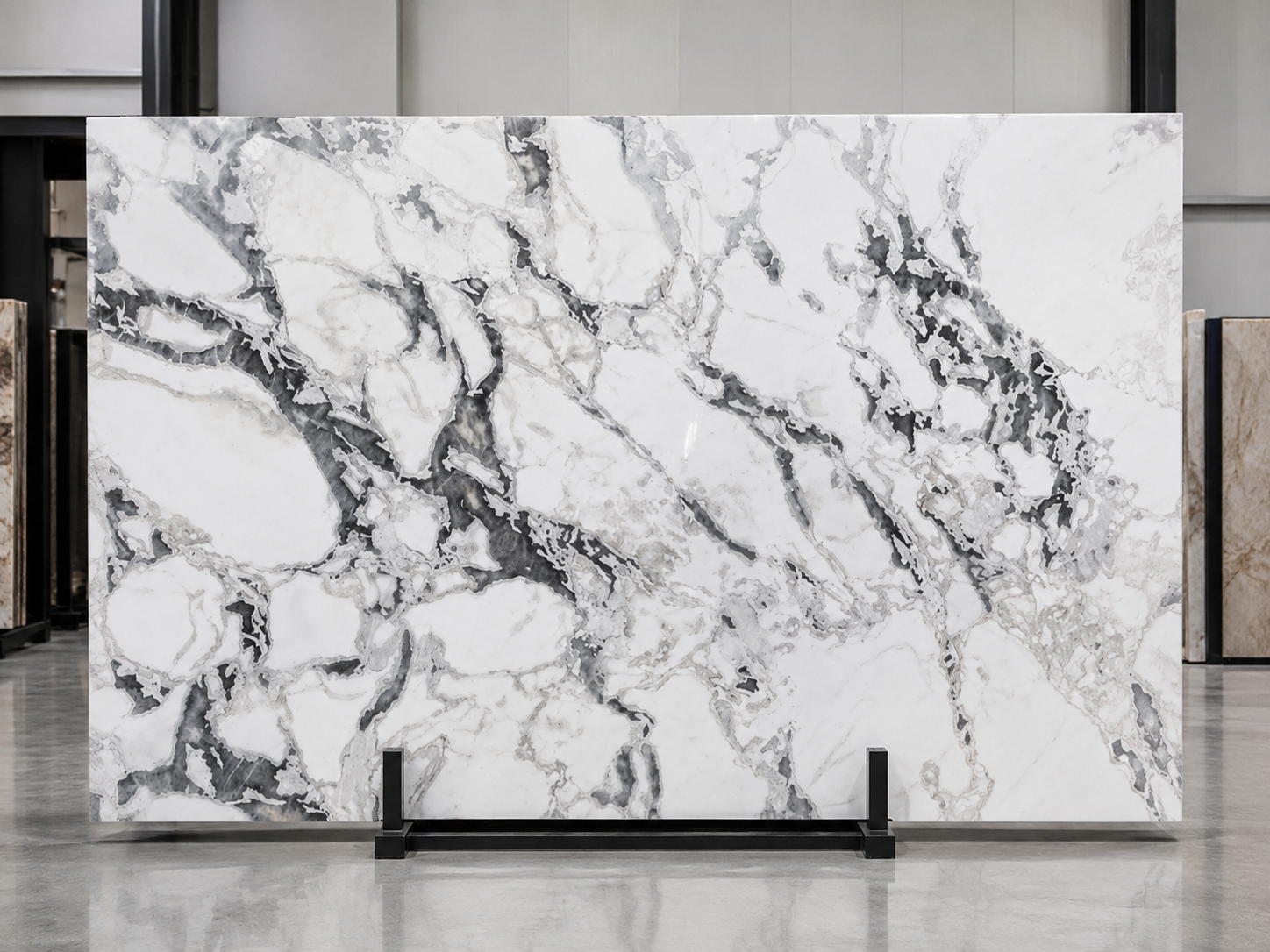
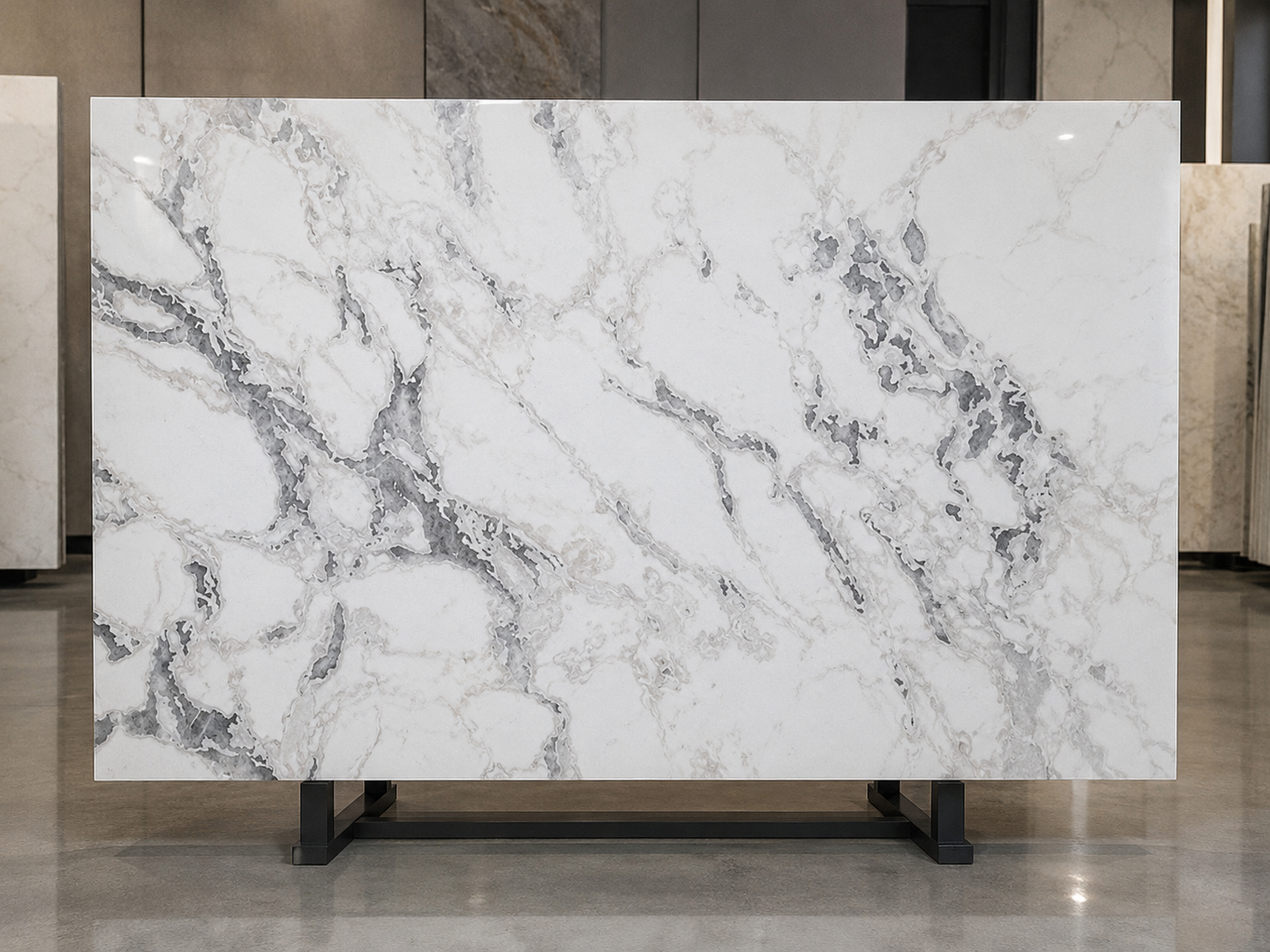

Dover White Marble is a premium white natural stone known for its bright appearance and soft natural movement.
Because of its elegant character, it can work well in interiors that need a clean, refined, and luxurious look without extremely dramatic veining.
Depending on the block and lot, Dover White Marble may show:
- White to soft-white background
- Gentle grey movement
- Subtle natural patterns
- Fine veins
- Cloud-like mineral formations
- Slight tonal variations
- Natural crystalline characteristics
However, these variations should not automatically be considered defects. Instead, they are part of the natural character of marble.
Therefore, premium selection is not about finding several slabs that look artificially identical. Rather, the aim is to choose a compatible group of slabs that works beautifully together.
How to Identify Premium Dover White Marble Slabs
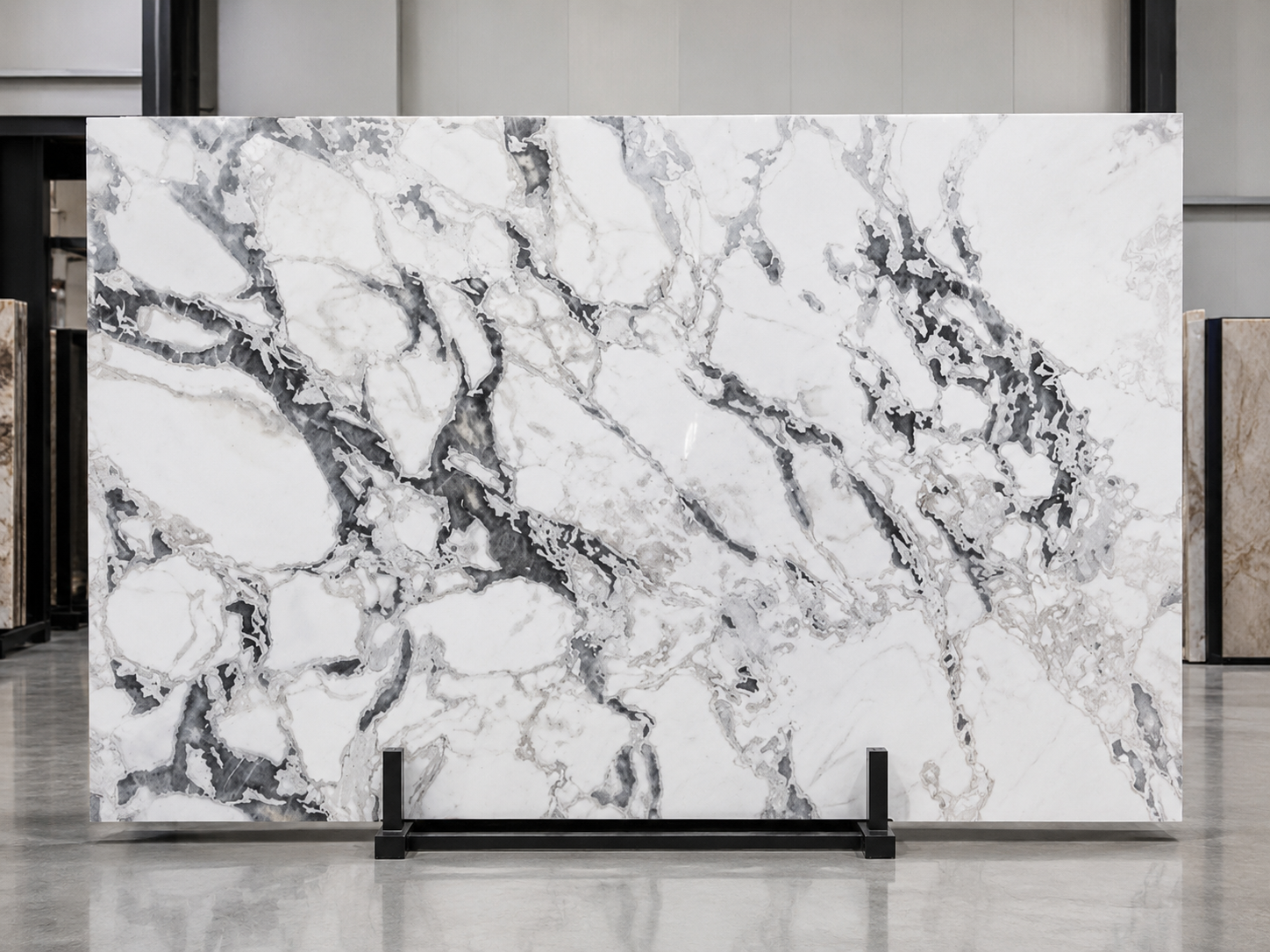
1. Start With the Background Colour
The background is one of the first features buyers notice in premium Dover White Marble slabs.
Generally, a cleaner and brighter background creates a luxurious appearance. This becomes even more important when the marble is used across a large floor or wall.
However, buyers should not judge a slab by looking at only one small section.
Instead, stand a few feet away and examine the complete slab.
Look for:
- Overall background brightness
- Colour consistency
- Warm or cool undertones
- Grey or cloudy areas
- Sudden dark patches
- Differences between slabs
For a large project, consistency between several slabs is often more important than finding one exceptionally white slab.
Why Background Consistency Matters
For example, imagine selecting twenty slabs for a large living room.
If half of the slabs appear bright white while the others have a warmer or greyer tone, the difference may become very visible after installation.
Therefore, always compare the complete required lot before giving final approval.
2. Study the Veining Across the Complete Slab
Veining gives natural marble its personality.
Premium Dover White Marble can look especially elegant when its natural movement supports the overall interior design.
However, do not select a slab only because one vein looks attractive.
Instead, examine:
- Vein direction
- Vein thickness
- Vein colour
- Vein density
- Branching
- Natural movement
- Continuity
- Distribution across the slab
For example, a slab with calm and balanced movement can work beautifully for large flooring areas.
On the other hand, stronger and more artistic movement may be better suited to a feature wall, vanity backdrop, staircase, or decorative panel.
Always Look at Full Slabs
A small marble sample cannot show the complete pattern of a natural slab.
Therefore, full-slab inspection is highly useful for important projects. It gives buyers a clearer understanding of the stone’s overall background, veining, and natural character.
3. Compare Multiple Slabs From the Same Lot
Comparing several slabs is one of the most important steps when purchasing Dover White Marble slabs.
A major project should never be approved after looking at only the most attractive slab in a warehouse.
Instead, ask to see several slabs from the same lot together.
Then compare:
- Background colour
- Veining
- Natural movement
- Tonal consistency
- Slab dimensions
- Structural characteristics
Of course, natural marble will always have some variation.
Therefore, the goal is not to make every slab look identical. Instead, the aim is to create a visually balanced and harmonious installation.
For Large Projects
For villas, hotels, resorts, premium apartments, and commercial interiors, it is better to select enough compatible material for the complete application whenever possible.
Otherwise, buying additional marble later may make exact lot matching difficult.
4. Check the Slab Sequence
Slab sequence becomes especially important when the design includes:
- Book matching
- Vein matching
- Large wall panels
- Feature walls
- Staircases
- Double-height spaces
- Reception backdrops
- Bathroom feature walls
Consecutive slabs from the same block may have related vein movement.
As a result, architects and fabricators can often use them to create a more planned and continuous design.
Before purchasing, ask your marble supplier to identify the slab numbers and sequence wherever available.
After that, the cutting and installation plan can be prepared according to the natural movement of the veins.
5. Inspect the Thickness Carefully

Thickness should be checked at several points across the slab.
After all, the correct thickness depends on the final application, fabrication method, and project specification.
While evaluating Dover White Marble, review:
- Overall thickness
- Thickness consistency
- Edge condition
- Calibration
- Fabrication requirements
Consistent thickness can make processing and installation easier.
However, buyers should confirm the required specification with their architect, fabricator, stone consultant, or installation team before placing the final order.
6. Examine the Surface Under Good Lighting
Lighting can significantly change the way white marble appears.
Therefore, avoid judging premium marble in poor, dark, or uneven lighting.
Whenever possible, examine the slab under strong neutral light or natural daylight.
In addition, view the surface from different angles.
This can help reveal:
- Fine veins
- Mineral formations
- Surface irregularities
- Natural fissures
- Resin-filled areas
- Colour variations
- Polish consistency
Moreover, viewing the stone from different angles helps you understand how light reflects from its surface.
This is particularly important for polished white marble.
7. Understand Natural Fissures and Stone Characteristics
Natural marble develops over a very long geological period.
As a result, slabs may contain natural characteristics such as:
- Fissures
- Mineral lines
- Colour variation
- Crystalline areas
- Natural markings
- Filled portions
However, these features should not automatically be treated as defects.
Instead, buyers should determine whether the characteristic is natural, structurally suitable, and acceptable for the intended application.
Therefore, when in doubt, discuss the slab with an experienced marble professional or fabricator before cutting.
8. Look at the Back of the Marble Slab
Many buyers focus only on the polished face of the marble.
However, examining the reverse side can also provide useful information.
For example, review the back for:
- Reinforcement
- Mesh
- Resin treatment
- Visible structural lines
- Edge condition
- Processing quality
Different natural stones may require different reinforcement and processing methods.
Therefore, any visible treatment should be considered together with the marble’s natural characteristics and intended use.
9. Check the Quality of the Finish
The finish can make a major difference to the final appearance of Dover White Marble.
Depending on availability and project requirements, marble may be supplied in different finishes.
Two common choices are polished and honed surfaces.
Polished Finish
A polished surface creates more reflection and can enhance the depth of the stone.
Therefore, it is often selected for:
- Luxury flooring
- Living rooms
- Hotel interiors
- Reception areas
- Feature walls
- Staircases
Honed Finish
In contrast, a honed surface has a softer and more understated appearance.
For this reason, it may work well in:
- Contemporary interiors
- Selected bathroom areas
- Wall applications
- Minimalist spaces
Ultimately, the right finish should depend on the design, application, safety requirements, and maintenance plan.
10. Examine the Slabs When They Are Dry
Whenever possible, inspect marble in its normal dry condition.
Water can temporarily change the appearance of natural stone. For instance, it can make some colours and veins appear deeper or stronger.
Therefore, buyers should understand how the marble looks under normal viewing conditions before giving final approval.
In addition, dry inspection makes it easier to compare the background colour of several slabs.
11. Plan the Cutting Yield Before Purchasing
A beautiful slab may not always be the most practical slab for your project.
For example, excessive wastage during fabrication can significantly affect the total marble requirement.
Therefore, consider the required cut sizes before finalising a lot.
These may include:
- Floor modules
- Stair treads
- Risers
- Wall panels
- Bathroom panels
- Vanity tops
- Skirting
- Door frames
- Window surrounds
Next, compare those dimensions with the available slab sizes.
As a result, a well-planned slab layout can improve cutting yield and reduce unnecessary waste.
Why Cutting Yield Matters
Suppose a project requires long staircase treads.
Even a beautiful marble lot may not be ideal if the slabs do not provide enough usable length. Consequently, the project may need unnecessary joints or generate excessive waste.
Therefore, design planning and fabrication planning should work together.
12. Select Dover White Marble According to Its Final Application
Not every attractive slab is suitable for every application.
Instead, a good marble selection process matches the character of the slab with the final architectural use.
Dover White Marble for Flooring
For large floors, give priority to:
- Background consistency
- Balanced movement
- Compatible slabs
- Adequate quantity
- Logical vein flow
Generally, a calmer and more consistent lot can create a continuous and sophisticated floor.
Dover White Marble for Living Rooms
Living rooms usually include large and highly visible surfaces.
Therefore, the marble should work well with:
- Wall colours
- Furniture
- Lighting
- Wood finishes
- Metal details
- Overall interior style
Because of its clean appearance, Dover White Marble can work particularly well in modern, contemporary, and luxury interiors.
Dover White Marble for Bathrooms
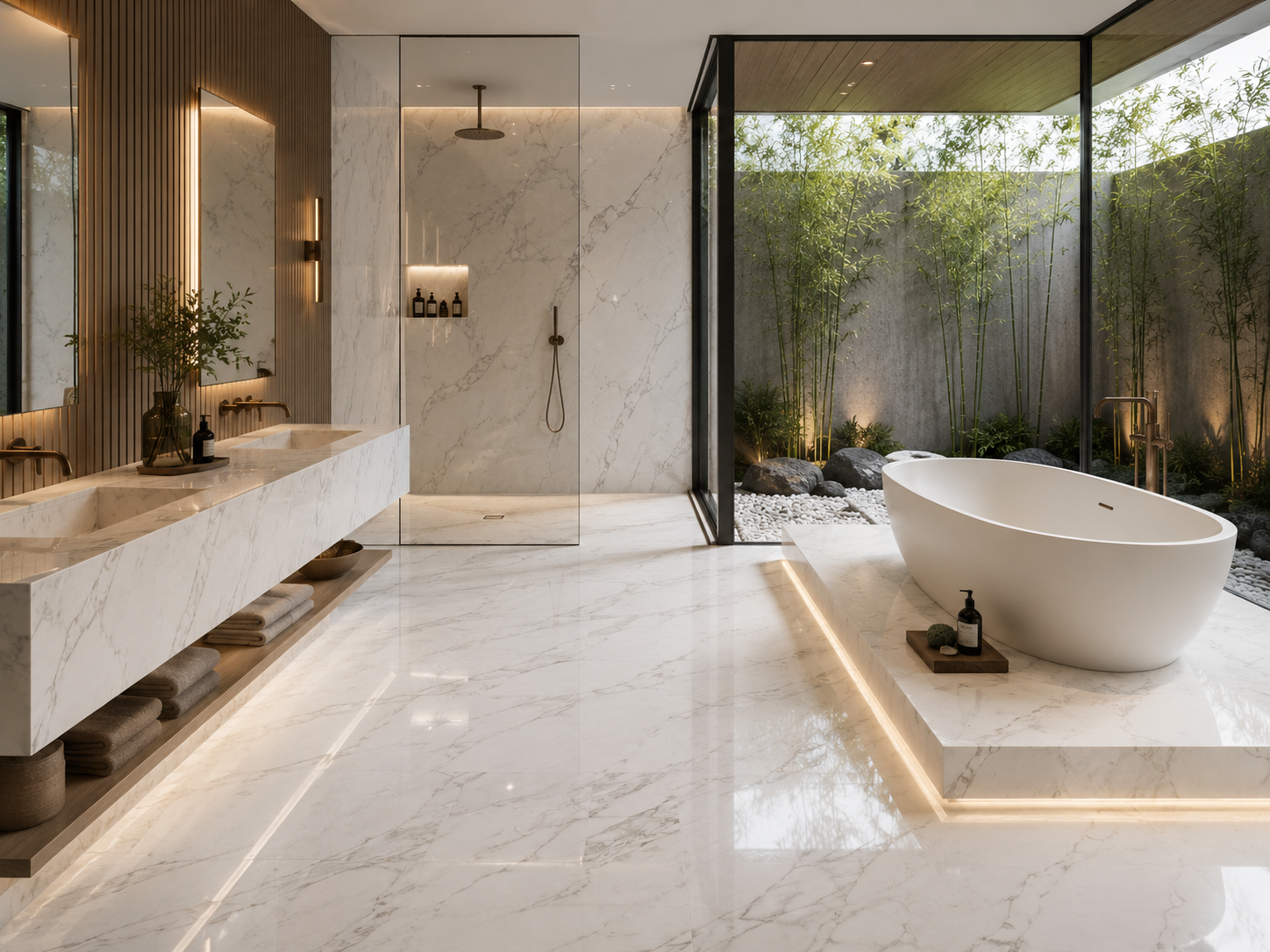
Bathrooms offer several creative ways to use natural stone.
For example, selected slabs can be used for:
- Vanity walls
- Shower walls
- Flooring
- Niches
- Bathtub surrounds
- Decorative panels
However, wet areas require careful planning.
Therefore, the stone specification, surface finish, waterproofing, sealing, and installation method should be reviewed by the project team.
Dover White Marble for Staircases

A staircase can become a major visual feature in a luxury home.
Therefore, while selecting slabs for stairs, consider:
- Tread dimensions
- Riser dimensions
- Vein direction
- Edge profile
- Thickness requirement
- Landing continuity
- Cutting yield
Most importantly, plan the complete staircase before cutting the first slab.
Dover White Marble for Feature Walls

For a feature wall, stronger marble movement can sometimes become an advantage.
Therefore, instead of always choosing the quietest slab, designers may select slabs with expressive natural patterns.
Moreover, book matching or vein matching can create a striking architectural composition when suitable slabs are available.
Dover White Marble Quality Checklist Before Buying
Before approving your order, use this simple checklist:
| Quality Factor | What to Check |
|---|---|
| Background | Brightness, shade, and overall consistency |
| Veining | Direction, density, thickness, and balance |
| Lot Matching | Compatibility between multiple slabs |
| Slab Sequence | Consecutive slabs where required |
| Thickness | Suitable and consistent for the application |
| Surface | Natural markings, fissures, and processing |
| Finish | Polish or other required finish |
| Dimensions | Suitability for required cut sizes |
| Cutting Yield | Expected usable area after fabrication |
| Application | Flooring, stairs, walls, bathrooms, etc. |
| Quantity | Enough compatible material for the project |
| Installation Plan | Final vein direction and slab placement |
Overall, this inspection process can help buyers make a better-informed decision before investing in natural stone.
Common Mistakes When Buying Dover White Marble
Mistake 1: Buying Only From a Small Sample
A sample can show basic colour and texture. However, it cannot represent the complete slab.
Therefore, inspect full slabs whenever possible for important projects.
Mistake 2: Selecting Only on Price
Price is certainly important.
However, the lowest-priced option may not always provide the best visual result, slab size, lot consistency, or cutting yield.
Therefore, consider quality, dimensions, lot matching, and final application together with price.
Mistake 3: Approving Only One Slab
One beautiful slab does not guarantee a beautiful finished floor.
Instead, compare all the required slabs together before making a final selection.
Mistake 4: Ignoring Shade Variation
White marble can naturally show tonal differences.
Unfortunately, these differences may become more visible after installation across a large area.
Therefore, shade matching is particularly important for large floors and walls.
Mistake 5: Ignoring Slab Sequence
Random cutting may reduce visual continuity.
For premium installations, however, careful slab placement can help maintain the intended vein flow.
Therefore, prepare the cutting plan before fabrication whenever vein continuity is important.
Mistake 6: Purchasing Only the Exact Net Quantity
A project may require additional material for cutting, vein planning, pattern alignment, fabrication, and future requirements.
As a result, ordering only the exact net area may not always be practical.
The architect, supplier, and fabricator should therefore calculate an appropriate allowance according to the project.
Mistake 7: Ignoring Lighting Conditions
White marble can look different under warm lighting, cool lighting, and natural daylight.
Therefore, examine the selected slabs under good lighting before final approval.
Premium Dover White Marble vs Ordinary Selection
The difference between a premium marble installation and an ordinary one often comes from the selection process, rather than only the marble name.
A premium selection process usually includes:
Full-slab inspection + Lot matching + Shade coordination + Vein planning + Cutting planning + Correct application
In contrast, a basic buying process may focus only on:
Marble name + Small sample + Price
For luxury projects, the first approach provides greater control over the final appearance.
Moreover, it allows architects and buyers to plan the material according to the actual space.
Why Full-Slab Inspection Is Important
A photograph is useful during the first stage of marble selection.
However, a photograph cannot fully communicate:
- Scale
- Depth
- Surface reflection
- Fine veins
- Tonal transitions
- Natural mineral movement
- Slab-to-slab variation
Therefore, full-slab inspection is particularly valuable when selecting premium Dover White Marble slabs.
If buyers cannot visit personally, they can request:
- Full-slab photographs
- Slab videos
- Slab numbers
- Lot photographs
- Close-up images
- Dimensions
- Thickness details
- Available quantity
In addition, ask the supplier to show several slabs together rather than presenting only one selected slab.
This gives a more realistic idea of the complete lot.
How Architects Should Select Dover White Marble for Large Projects

Architects and interior designers should ideally begin with the final application instead of selecting only by marble name.
A practical selection process can work as follows:
First, define the application. Determine whether the marble will be used for flooring, walls, bathrooms, staircases, or another feature.
Next, calculate the approximate requirement. This helps identify whether a suitable lot has enough material for the project.
After that, determine the required cut sizes. Large panels and long staircase pieces may need specific slab dimensions.
Then, shortlist suitable Dover White Marble lots. Compare the visual character and available quantity.
Once suitable lots are identified, inspect the complete slabs. Review the background, veins, dimensions, and surface condition.
At the same time, compare slab-to-slab consistency. This is especially important for large floors and walls.
Next, study the cutting yield. The selected slabs should work efficiently with the required dimensions.
Where needed, identify the slab sequence. Consecutive slabs can be useful for vein matching and book matching.
Before fabrication, prepare a vein-flow and cutting plan. This can improve the final visual continuity.
Finally, approve the complete lot before cutting begins.
As a result, the marble selection becomes part of the architectural planning rather than a separate purchasing decision.
Is Dover White Marble Good for Luxury Interiors?
Yes. Dover White Marble can be an excellent option when the design calls for a bright, elegant, and refined natural-stone appearance.
For example, it can complement:
- Contemporary villas
- Luxury apartments
- Premium residences
- Hotels
- Offices
- Reception areas
- Bedrooms
- Bathrooms
- Staircases
- Designer walls
Moreover, its relatively soft visual movement can allow furniture, lighting, artwork, and architectural details to remain important features of the interior.
Therefore, it can work well in spaces where designers want luxury without overly dramatic marble patterns.
How to Maintain Dover White Marble
Proper care can help maintain the appearance of natural marble.
For regular maintenance:
- Remove loose dust and dirt regularly.
- Clean spills promptly.
- Use cleaning products suitable for natural marble.
- Avoid strong acidic cleaning chemicals.
- Follow professional recommendations for sealing.
- Protect heavily used surfaces where necessary.
- Use qualified professionals for restoration or polishing when required.
However, every marble installation is different.
Therefore, maintenance recommendations should be based on the actual stone, finish, usage, and installation conditions.
Frequently Asked Questions About Dover White Marble Slabs
1. How can I identify premium Dover White Marble?
Begin by examining the complete slab rather than a small sample. In particular, review the background colour, vein movement, surface condition, dimensions, thickness, and compatibility with other slabs from the lot.
2. What should I check before buying Dover White Marble slabs?
Before buying, review the background, veins, lot consistency, dimensions, thickness, finish, natural characteristics, slab sequence, and cutting yield. In addition, make sure the lot is suitable for the final application.
3. Is a whiter Dover White Marble always better?
Not necessarily. Although background brightness is important, premium selection should also consider veining, slab condition, dimensions, consistency, and project requirements.
4. Should I inspect a full slab or a small marble sample?
For an important project, full-slab inspection is preferable. A small sample may show the basic colour, but it cannot reveal the complete vein pattern, tonal movement, or natural character.
5. Why should Dover White Marble slabs be selected from the same lot?
Compatible slabs can provide better continuity in background colour and natural movement. Therefore, lot matching becomes especially important for large floors, walls, and staircases.
6. Is Dover White Marble suitable for flooring?
Yes. Dover White Marble can be used for premium flooring when the slab selection, finish, fabrication, and installation specification are suitable for the project.
7. Can Dover White Marble be used in bathrooms?
Yes. It can create elegant vanity areas, floors, and wall surfaces. However, the project team should choose the correct finish, waterproofing, sealing, and installation system for wet areas.
8. Is Dover White Marble suitable for staircases?
Yes. Its elegant white appearance can create a sophisticated staircase. However, slab dimensions, thickness, vein direction, and cutting yield should be planned before fabrication.
9. Why is vein matching important?
Vein matching can create better visual continuity between adjacent marble pieces. Therefore, it can be particularly useful for feature walls, floors, staircases, and large-format applications.
10. What is the most important factor when selecting Dover White Marble?
There is no single factor that determines the best slab.
Instead, buyers should evaluate the complete slab, complete lot, and intended application together before making a decision.
Final Thoughts
Buying Dover White Marble slabs should involve much more than comparing marble names and prices.
After all, every natural slab is unique.
Therefore, the best results come from understanding how the background, veining, shade, dimensions, thickness, finish, slab sequence, and cutting yield will work together in the finished project.
For a small application, selecting one attractive slab may be enough.
However, a luxury villa, hotel, large residence, or architectural project usually requires a more detailed selection process.
In such cases, the complete lot should be considered as one design composition.
The principle is simple:
Do not select only the marble name. Select the actual slabs that will become part of your project.
Looking for Premium Dover White Marble Slabs?

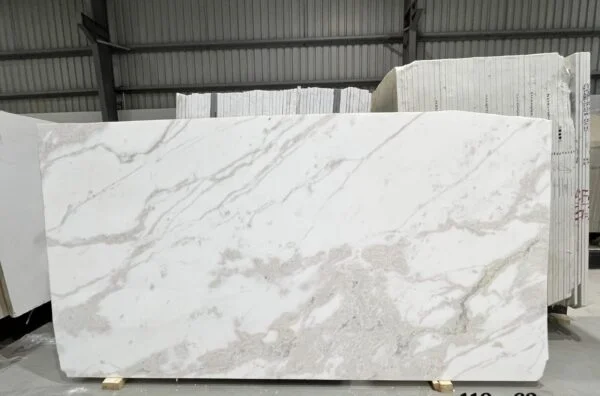
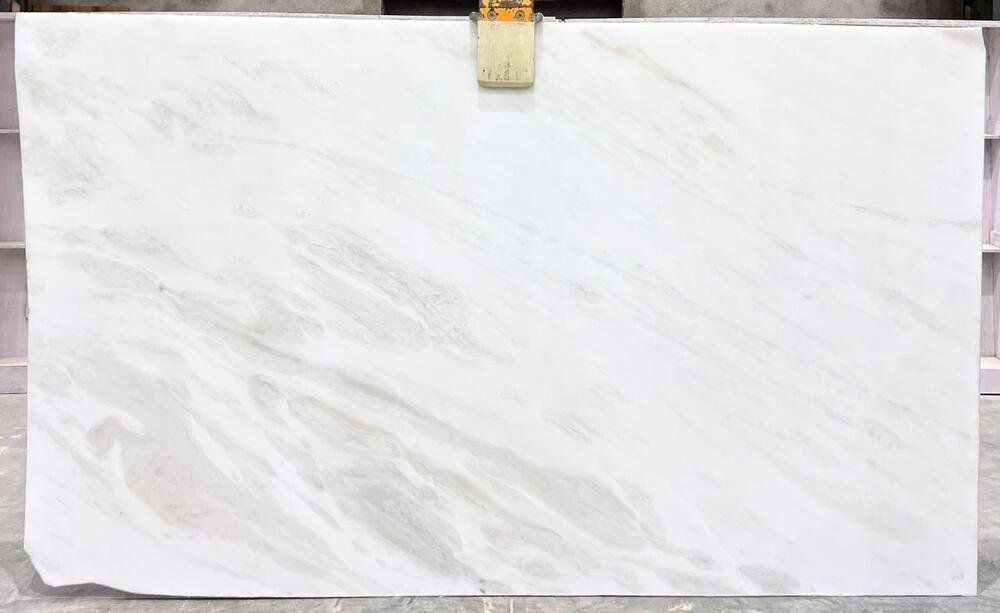
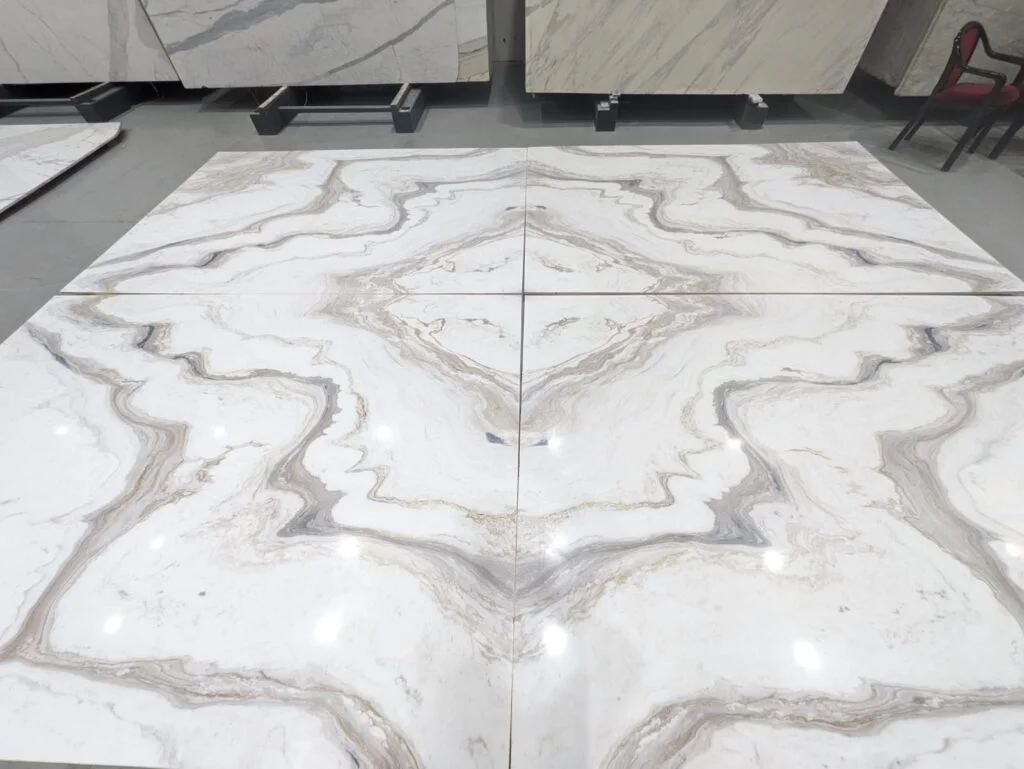
Explore Dover White Marble at Bhandari Marble Group, Kishangarh and select available slabs according to your project’s design, quantity, and application requirements.
For project enquiries, buyers can request:
- Current Dover White Marble slab availability
- Full-slab photographs and videos
- Lot inspection
- Shade and vein matching
- Slab dimensions
- Project quantity planning
- Cutting and application guidance
- Project quotation
- Pan-India supply assistance
Whether you are an architect, interior designer, builder, developer, hotelier, or homeowner, selecting the right slab lot before fabrication can make a major difference to the finished interior.
Therefore, take the time to inspect, compare, and plan your marble carefully.
Choose the stone carefully. Inspect the complete slab. Match the lot. Plan the veins. Then create the space.
