
When buying Italian marble, most buyers focus on color, price, and finish.
But one critical factor that directly impacts durability and performance is slab thickness.
If you are sourcing Italian marble in Kishangarh, understanding thickness standards can help you avoid costly mistakes.
Why Thickness Matters
Marble thickness affects:
- Structural strength
- Load-bearing capacity
- Crack resistance
- Installation stability
- Long-term durability
Choosing the wrong thickness can compromise even the most premium marble variety.
Standard Italian Marble Thickness in India
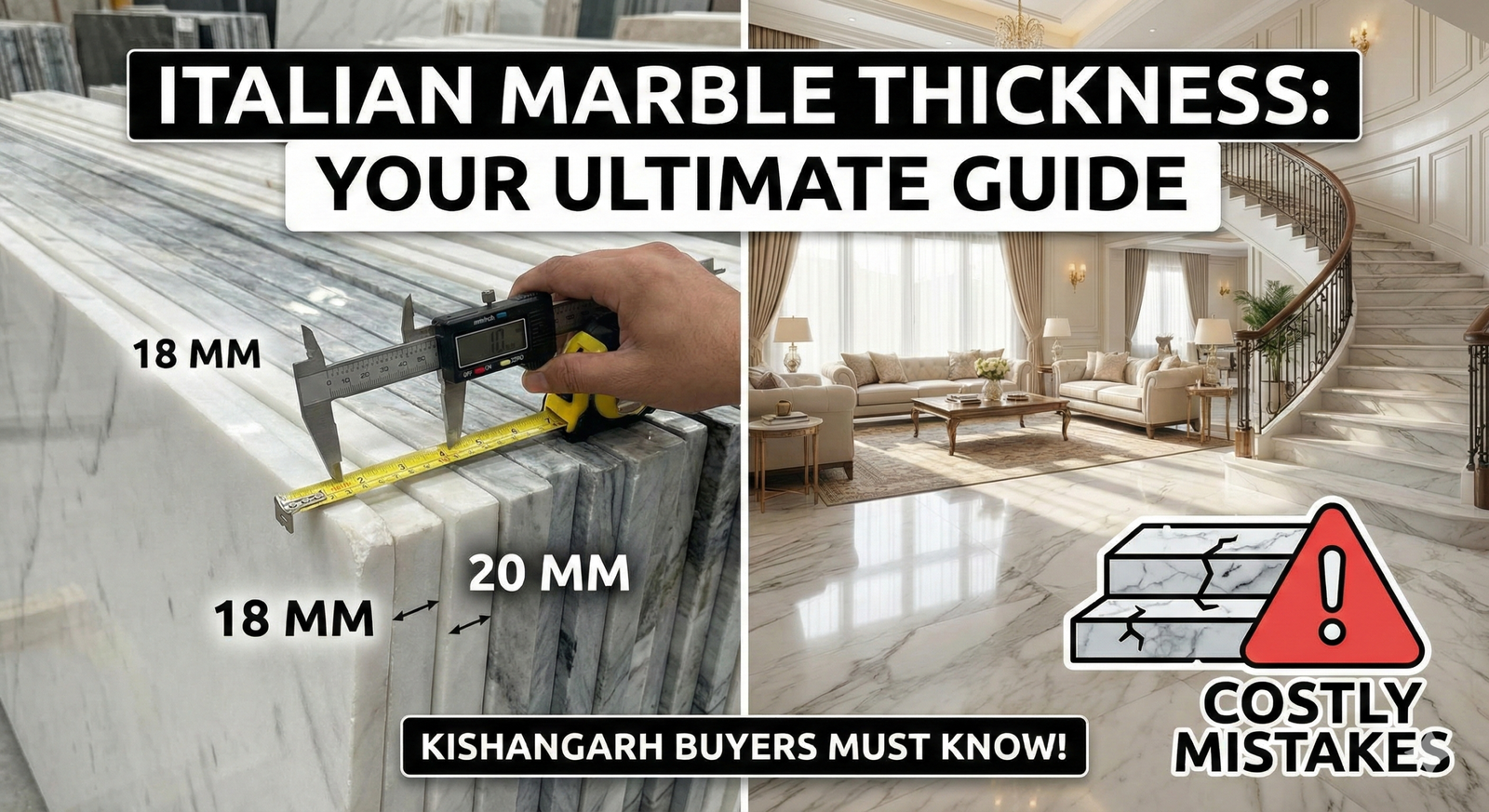
Most imported Italian marble slabs are available in:
- 18 mm (approximately 3/4 inch)
- 20 mm
These are considered ideal for residential and commercial applications when installed correctly.
Recommended Thickness by Application
1️⃣ Flooring (Residential Homes)
18–20 mm thickness is typically sufficient.
It provides:
- Strong base support
- Long-term performance
- Re-polishing capability
2️⃣ Luxury Villas & High-Traffic Areas
20 mm thickness is preferred for:
- Grand living rooms
- Hallways
- Lobby areas
Higher thickness improves load resistance.
3️⃣ Staircases
Minimum 20 mm recommended to avoid edge cracking.
Precision cutting and proper edge finishing are crucial.
4️⃣ Wall Cladding
For vertical installations, thinner slabs may be used with proper backing support.
However, full-thickness slabs provide better visual depth.
5️⃣ Countertops & Vanity Tops
Thickness selection depends on:
- Span length
- Cabinet support
- Edge design
Reinforcement may be required for overhang areas.
Why Inspect Thickness Before Buying
When visiting major marble hubs like
Kishangarh
Buyers should:
- Measure slab thickness physically
- Check uniformity across the slab
- Inspect for warping or uneven cutting
Thickness inconsistency can lead to installation challenges.
Common Thickness Mistakes
- Choosing thinner slabs for cost savings
- Ignoring support structure requirements
- Not factoring in polishing reduction
- Overlooking edge reinforcement for countertops
Proper planning prevents structural issues later.
Architect’s Recommendation
Experienced architects recommend:
- Never compromising on thickness for large flooring areas
- Matching thickness with intended application
- Consulting installation experts before finalizing slabs
Thickness is not just a measurement — it is a durability decision.
Final Thought
Italian marble is an investment.
Choosing the correct thickness ensures that your luxury surface remains strong, stable, and beautiful for decades.
When sourced wisely and installed correctly, it becomes a generational material.
Frequently Asked Questions (FAQs)
1. What is the standard thickness of Italian marble slabs?
The standard thickness of Italian marble slabs in India is usually 18 mm to 20 mm. This thickness is suitable for most residential and commercial applications.
2. Is 18 mm Italian marble strong enough for flooring?
Yes, 18 mm thickness is generally strong enough for residential flooring when installed on a properly prepared base. For high-traffic areas, 20 mm is often preferred.
3. Which thickness is best for luxury villas?
For luxury villas and large living spaces, 20 mm Italian marble is recommended because it offers better load resistance and long-term durability.
4. Does thicker marble mean better quality?
Thickness and quality are different factors. Quality depends on grade, density, and processing. However, thicker slabs may provide better structural strength.
5. What thickness is recommended for Italian marble staircases?
A minimum of 20 mm thickness is recommended for staircases to reduce the risk of edge cracking and improve durability.
6. Can thinner marble reduce project cost?
Yes, thinner slabs may reduce initial cost, but they can increase the risk of breakage or installation issues if not properly supported.
